Avoiding Meltdowns: Preparing Your Kids for Transitioning Activities
"Five more minutes, and then we are leaving the park."
If those words are regularly met with tears, crossed arms, or resistance, this blog is for you. When transitioning activities with your child, whether it’s stopping screen time for dinner, leaving a playdate, or wrapping up a favorite game, it can be a challenge. Transitioning activities can require a lot of mental energy, executive function skills, and emotional regulation. For children, moving from a preferred activity to a non-preferred one can feel overwhelming and challenging.
Fortunately, teaching the skill of transitioning doesn't have to be a daily battle. By implementing a few proactive routines, you can help your child navigate these daily shifts with much less stress.
Here are six practical, parent-tested strategies to make your next transition a breeze.
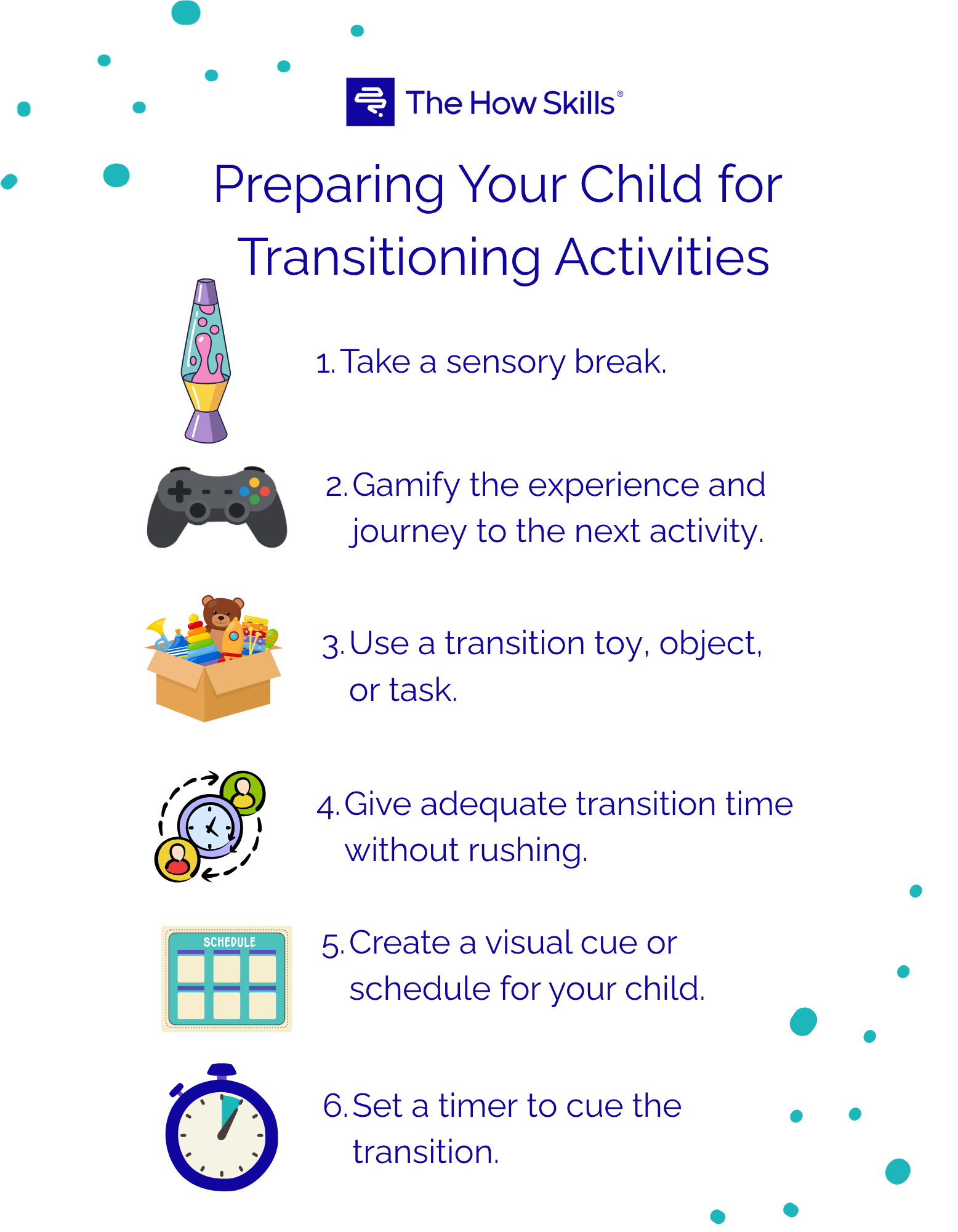
1. Take a Sensory Break
Moving straight from a high-energy activity (like running outside) to a low-energy one (like sitting down for homework) can be jarring. Before forcing the shift, give your child a chance to regulate their nervous system. A quick sensory break, like taking a few deep belly breaths, listening to a calming song, or spending a minute watching a bubble timer or lava lamp, acts as a more meaningful transition for the brain, making them much more receptive to what comes next.
2. Gamify the Journey
Kids are hardwired to play, so why not turn the actual movement between activities into a game? Instead of commanding them to walk to the car, challenge them to a race, see if they can stomp like dinosaurs all the way to the bathroom to brush their teeth, or play "The Floor is Lava" down the hallway. By focusing on the fun of the game, they completely forget to protest the transition itself.
3. Use a Transition Toy, Object, or Task
Give your child a physical bridge from Point A to Point B. A transition object can be a favorite stuffed animal that "rides" with them to the dinner table, or a specific task, like being the official keeper of the car keys. Having something tangible to hold onto provides comfort and gives their hands and mind a clear, immediate purpose during the shift.
4. Give Adequate Time Without Rushing
Children can instantly sense our urgency. When we are rushing and barking orders, their fight-or-flight response kicks in, often leading to a meltdown. Whenever possible, build a 5-to-10-minute buffer into your schedule. Giving your child space to wrap up what they are doing at a natural pace makes them feel respected and calm.
5. Create a Visual Cue or Schedule
Children are visual learners, and the unknown can be deeply unsettling for them. A simple, visual schedule using pictures or drawings helps take the guesswork out of their day. When they can clearly see that Playtime is followed by Lunch, and then Nap, they know exactly what to expect. You can point to the chart together ahead of time so they can mentally prepare for the shift.
6. Set a Timer to Cue the Transition
When you tell a child "it's time to stop," it can feel like an arbitrary rule coming from you. When you use a timer, the timer becomes the "bad guy." Try using a visual countdown timer where the colored disc disappears as time ticks away. Tell your child, "When the timer beeps, it’s time to clean up." Because they can see the time slipping away, the transition doesn't catch them by surprise.
Helping your child better understand transitions won't happen overnight, and that is completely okay. The trick is consistency. Pick just one or two of these strategies to try out this week, stick with them, and see which ones resonate best with your child's unique personality.